English
  Tiếng Việt
Can Dental Implants Cause Bone Loss? The Truth Explained
Many people worry that dental implants may cause reverse bone loss and eventually damage the artificial tooth root. But is that really true? In this article, The East Rose Dental will help you better understand how implants integrate with the jawbone, while also explaining the real causes of bone loss so you can feel more confident choosing a long-term tooth replacement solution.
The Truth About Whether Dental Implants Cause Bone Loss
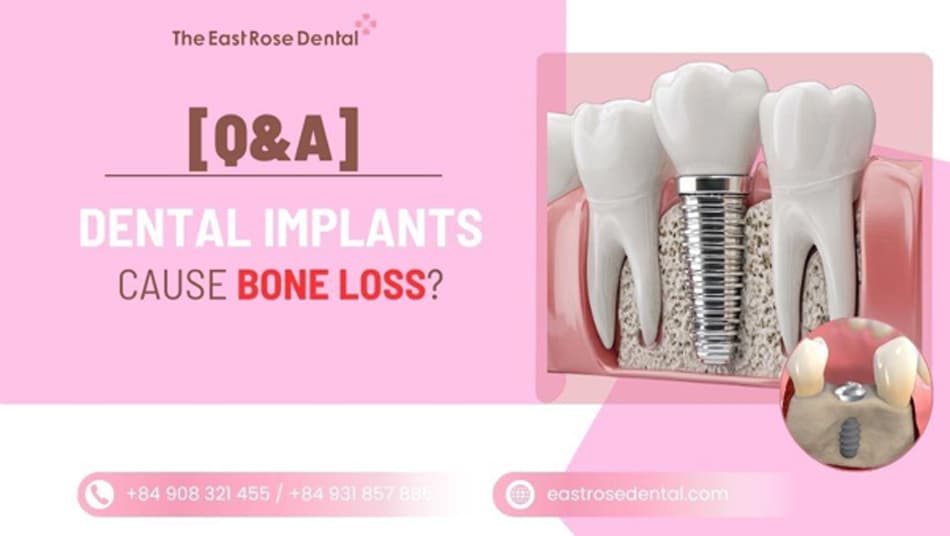
Many people worry about one concern before getting dental implants: Can implants actually cause reverse bone loss? To answer this accurately, it is important to look at the scientific interaction between artificial materials and the human body.
The Osseointegration Mechanism of Dental Implants
Unlike traditional restoration methods, dental implants work based on the mechanism of “osseointegration.” Implant posts are made from titanium, a material with excellent biocompatibility.
Once placed into the jawbone, bone cells naturally attach to the implant surface, creating a stable and unified structure. Rather than causing harm, the implant functions like a natural tooth root, continuously transferring chewing force into the jawbone. This stimulation helps bone cells maintain the necessary density and thickness.
Do Dental Implants Cause Reverse Bone Loss?
The answer is clearly NO. From both medical and technical perspectives, dental implants are currently the only solution that helps prevent bone loss after tooth loss.
Instead of causing bone deterioration, implant posts help preserve jawbone density, prevent gum recession, and reduce shifting of adjacent teeth. Therefore, the belief that dental implants cause bone loss is completely opposite to the true nature and function of this treatment method.
5 Causes of Bone Loss After Dental Implant Placement
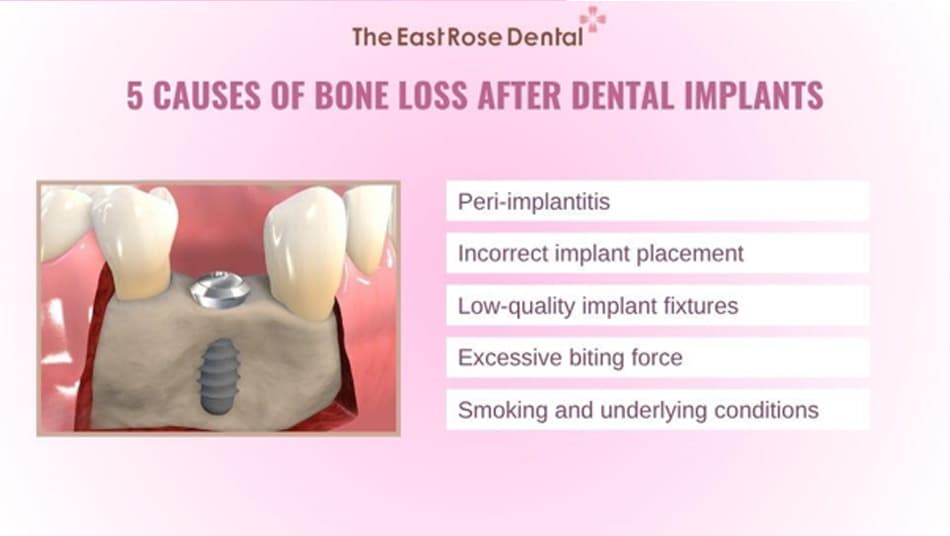
Although dental implants are designed to preserve the jawbone, bone loss may still occur in certain cases. However, this does not come from the implant itself, but rather from medical conditions, treatment errors, or poor aftercare.
1. Peri-Implantitis
This is the most common cause of bone loss around the implant neck. When food debris and plaque are not cleaned properly, bacteria form a biofilm around the implant area. These bacteria release toxins that first cause gum inflammation, then gradually destroy the surrounding bone tissue. If left untreated, the supporting bone slowly deteriorates, causing the implant to loosen over time.
2. Incorrect Implant Placement or Biological Width Violation
Every implant requires a proper “safe biological space” to function long term. If the implant is placed too close to thin bone or if surrounding bone density is not carefully evaluated, blood supply to the area may become compromised. Without adequate nutrition and circulation, the bone may gradually resorb naturally. This is why implant placement requires extremely precise planning and high surgical accuracy.
3. Low-Quality Implant Systems
Low-cost implant systems often have less advanced surface treatment technologies such as SLA or RBM, reducing their ability to integrate effectively with the bone. If the implant surface lacks the ideal texture or contains impurities, bone-forming cells cannot attach firmly. Over time, chewing pressure may weaken these unstable connections, allowing bacteria to invade and trigger bone loss around the implant.
Read more: What are the types of implants at The East Rose Dental Clinic - Which type is suitable?
4. Excessive Bite Force (Overloading)
Unlike natural teeth, which have periodontal ligaments acting as shock absorbers, implants are directly anchored into the jawbone. If the prosthetic crown is designed with an improper bite alignment or if the patient suffers from teeth grinding, excessive force may transfer directly into the bone. Repeated overload can create microtrauma, causing the surrounding bone to weaken and gradually resorb.
5. Smoking and Poorly Controlled Medical Conditions
These are considered “silent enemies” that negatively affect the survival of bone around implants. Nicotine from smoking constricts blood vessels, reducing oxygen and nutrient supply to the jawbone and slowing down healing and osseointegration.
Similarly, patients with uncontrolled diabetes often have weakened immune systems, making them more vulnerable to chronic infection and inflammation. When the surrounding bone continuously lacks nutrients or is constantly attacked by bacteria, it may gradually deteriorate and increase the risk of implant failure.
Signs of Bone Loss After Dental Implant Placement
After understanding the causes, recognizing early warning signs is extremely important. Below are some common signs of bone loss around dental implants that you should pay close attention to:
- Exposure of the implant neck or threads: When jawbone height decreases, the surrounding gum tissue may recede, exposing parts of the implant that were previously hidden beneath the bone and gum.
- Swollen or discolored gums: Healthy gums around implants should appear firm and pink. Redness, swelling, or bleeding while brushing may indicate peri-implant inflammation, a major cause of bone loss.
- Pus discharge or bad odor: If you notice pus, an unusual taste, or persistent bad breath around the implant area, this may be a sign of severe infection affecting the surrounding bone tissue.
- Implant mobility: A healthy implant should remain completely stable within the jawbone. Even slight movement when chewing or touching the implant may suggest significant bone deterioration around the implant.
- Persistent pain or discomfort when chewing: Ongoing soreness or pressure beneath the implant crown may indicate inflammation or excessive bite force affecting the supporting bone.
- Changes in facial appearance: Significant jawbone loss may cause the cheeks or surrounding facial areas to appear sunken, making the face look older overall.
Note: If you experience any of the signs above, you should visit a dental professional as soon as possible for X-ray evaluation and timely treatment to help prevent implant failure.
Implant Bone Loss Recovery Process at The East Rose Dental
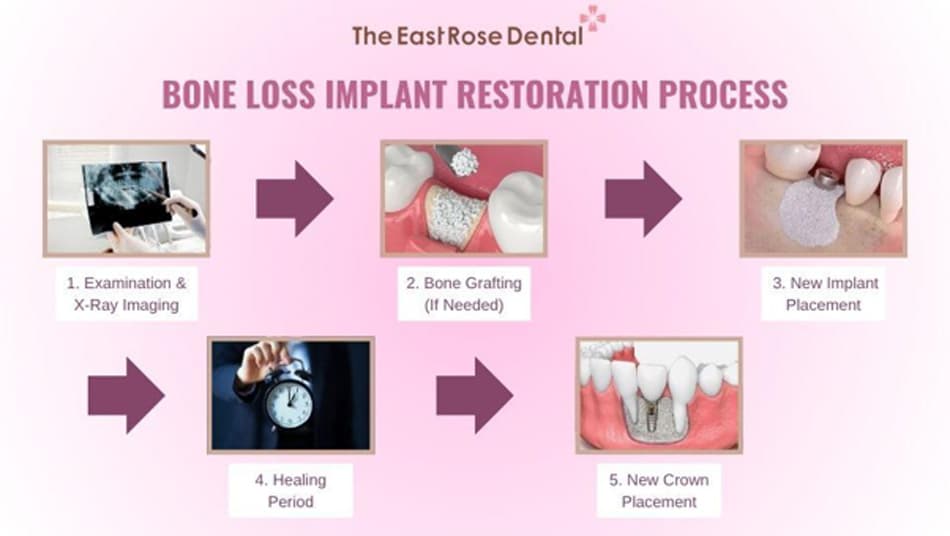
When dealing with bone loss around dental implants, treatment requires precision and support from advanced technology. At The East Rose Dental, strict medical standards are applied to maximize treatment success.
- Advanced examination and diagnostic imaging: Dentists use modern 3D Cone Beam CT imaging systems to accurately evaluate jawbone density, height, and volume. Based on this digital data, a detailed treatment plan is created to restore bone loss and optimize implant positioning.
- Bone grafting and sinus lift techniques (if needed): For cases with significant jawbone deterioration, bone grafting or sinus lift procedures may be performed to rebuild a stable foundation. This step ensures the new bone has sufficient volume and strength before integrating with the implant.
- International-standard implant placement: The clinic uses high-quality implant systems from leading global brands. Implant placement is performed precisely according to the digital treatment plan, helping minimize invasiveness and support faster healing.
- Stable osseointegration phase: Patients typically wait around 3-6 months for the implant and newly regenerated bone to integrate into a stable structure. This healing period is essential to ensure the artificial tooth root achieves durability comparable to or even stronger than natural teeth.
- Final porcelain crown restoration: After successful osseointegration, the dentist attaches a customized porcelain crown designed to match the patient’s bite and facial aesthetics. The final result restores both chewing function and a natural-looking smile.
Bone loss around dental implants is a concerning complication, but it can be controlled and restored when detected early and treated properly. Choosing The East Rose Dental, where experienced specialists and advanced technology come together is the key to achieving stable implant integration, a confident smile, and long-term oral health.
3 Common Questions About Jawbone Loss After Dental Implant Placement
Besides concerns about whether implants can cause reverse bone loss, many patients also have questions about the following practical issues during treatment.
1 - Can I Still Get Dental Implants After Jawbone Loss?
Yes. Even if jawbone loss has already occurred, dental implants are still possible after bone grafting or sinus lift procedures to restore lost bone volume. Modern techniques allow dentists to rebuild enough bone structure to support implants securely.
2 - How Soon Does Jawbone Loss Begin After Tooth Loss, and When Should Implants Be Placed?
Bone loss begins immediately after tooth loss. During the first 12 months, approximately 25%-40% of jawbone volume at the missing tooth area may disappear. Therefore, the ideal time for implant placement is usually within 1-3 months after tooth loss to avoid more complex and costly bone grafting procedures later.
3 - What Is the Most Effective Treatment for Jawbone Loss Today?
Dental implants are currently considered the only solution capable of effectively preventing and limiting long-term jawbone loss. Other options such as removable dentures or dental bridges may restore appearance and chewing function, but they do not replace the tooth root, meaning the jawbone may continue to resorb over time.
We hope this article has helped ease your concerns about reverse bone loss after dental implant treatment. In reality, dental implants are considered one of the most effective solutions today for preventing jawbone deterioration and unwanted tooth shifting. With the right specialist and proper long-term care, you can confidently enjoy a strong, natural-looking smile without worrying about serious complications.
Services
Working Time
- Monday - Friday: 08:00 - 19:00
- Saturday: 08:00 - 18:00
- Sunday closed
Contact Info
- Hotline 1: 1900 585 874
- Hotline 2: (+84)838 258 778
- Mobile: (+84)908 321 455
- Phone: (+84)2 838 258 778
- info@dentalrose.net
- rosedentalclinicvn@gmail.com